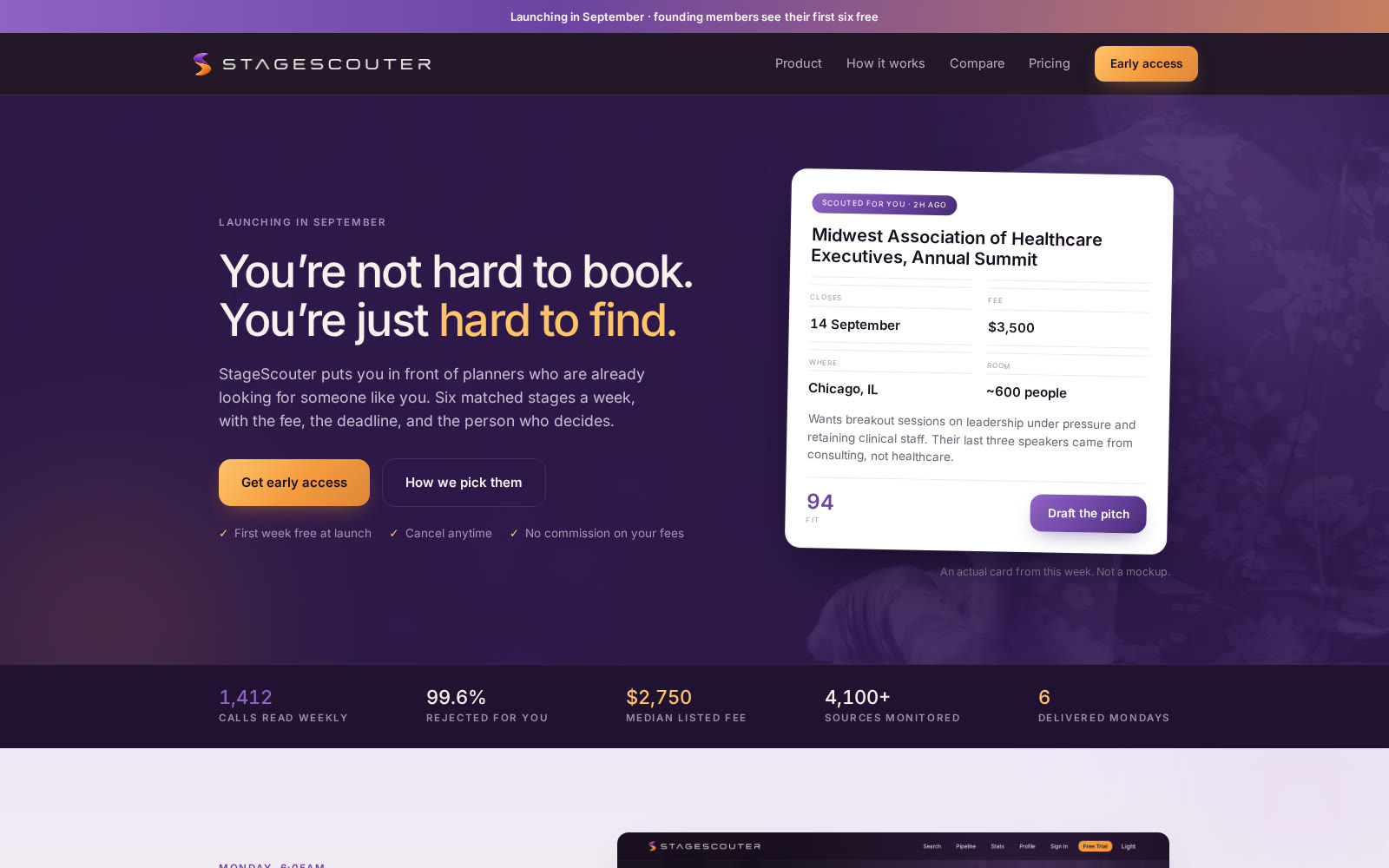
Naming, identity, and the full product build for StageScouter, live at stagescouter.com: a platform that reads every call for speakers in the country each week and hands members the six worth pitching, scored, with the fee, the deadline, and the decision maker’s name.
Scroll
Client
StageScouter
Sector
Technology · Speaking
Disciplines
Naming · Brand · App Development
Year
MMXXVI
01
The brief.
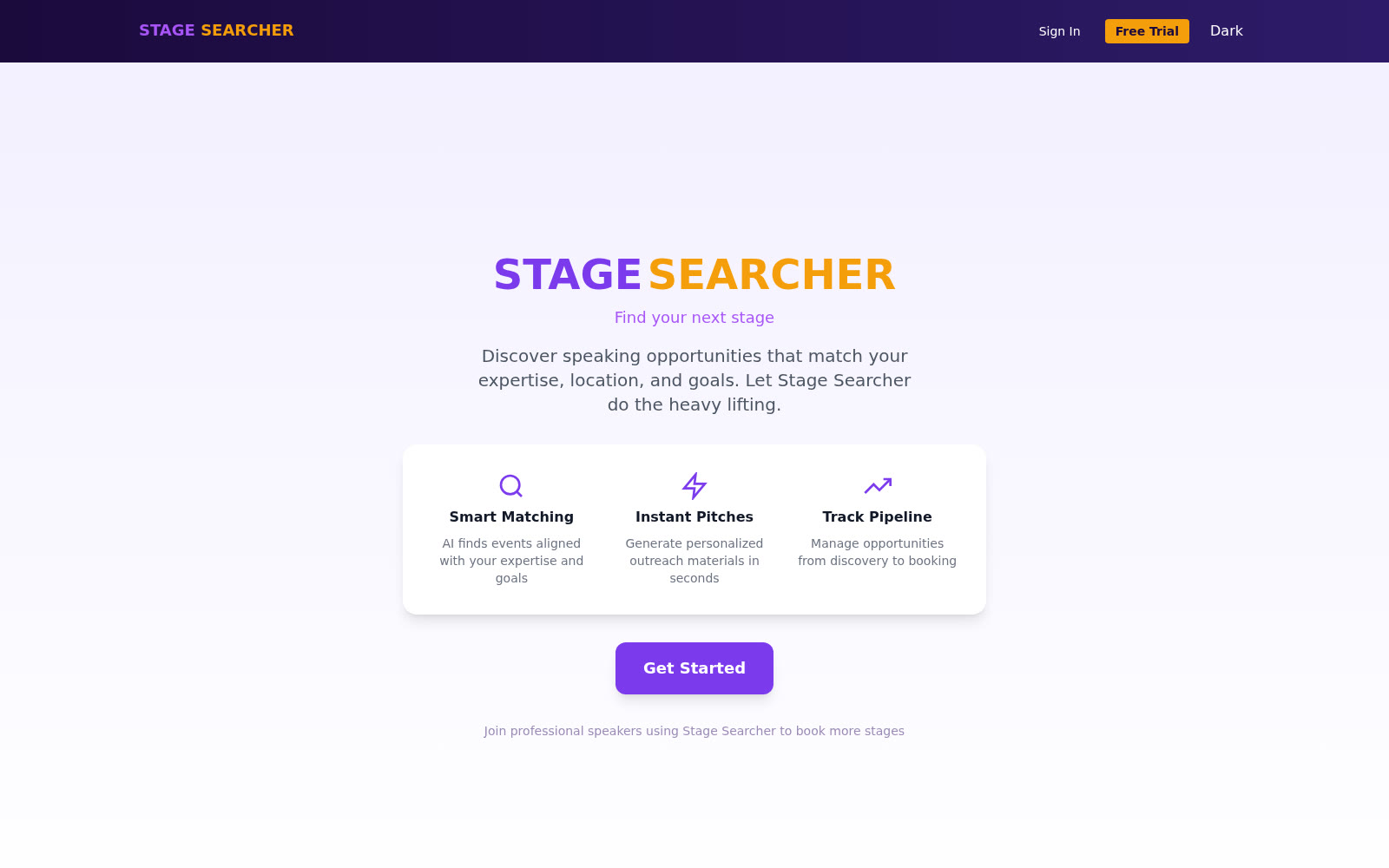
The product worked: it read the whole market of speaking opportunities and matched speakers to the stages worth their time. The brand did not. It launched as Stage Searcher, wearing the generic costume of the category: a purple gradient, an orange trial button, and a name that described the mechanism instead of the promise.
The mandate: a new name, an identity with an idea behind it, and product direction that could justify a premium price.
Before · Stage Searcher, in the category costume
02
The idea.
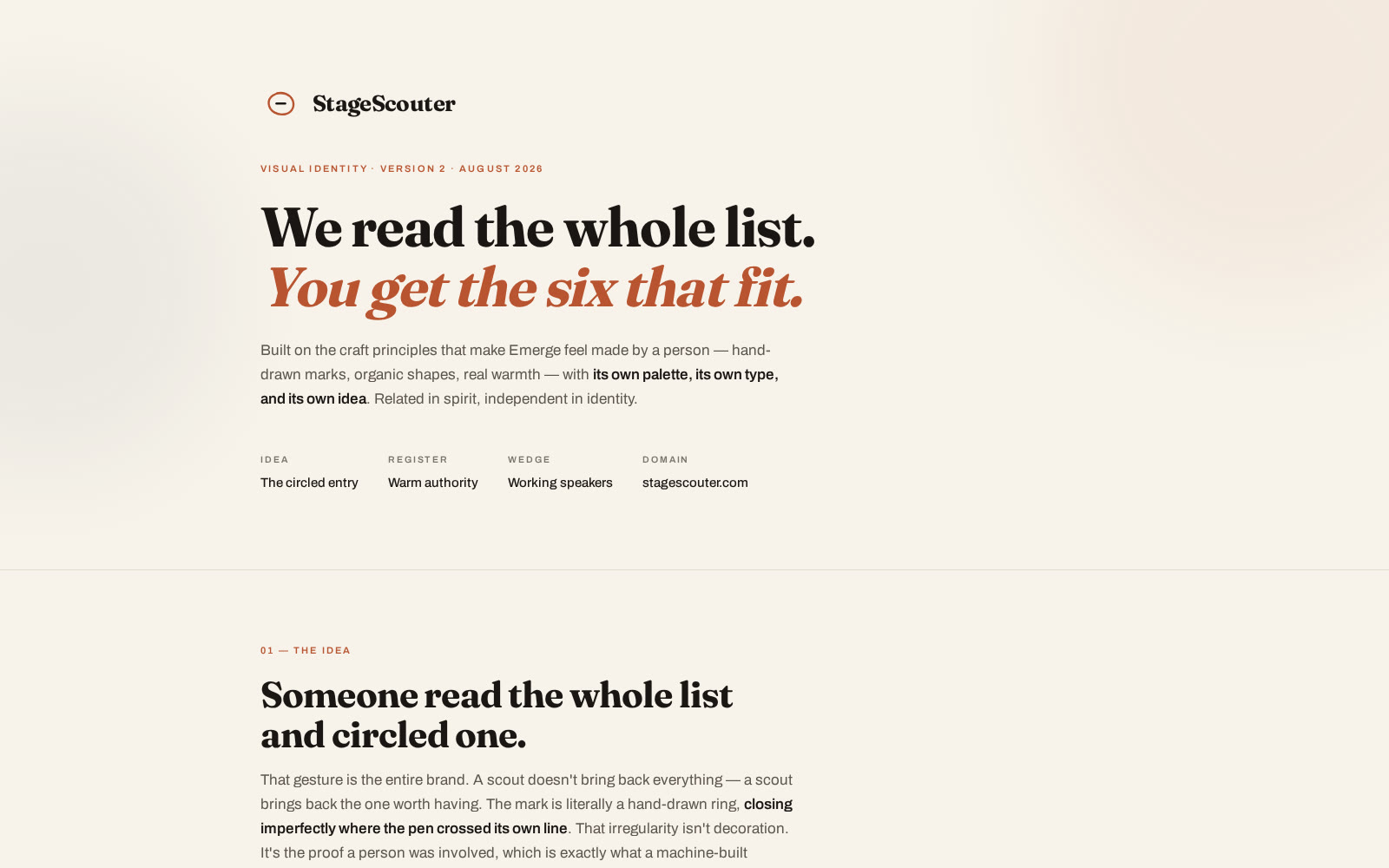
Someone read the whole list and circled one. That gesture became the entire brand. A scout does not bring back everything, a scout brings back the one worth having. The mark is literally a hand drawn ring, closing imperfectly where the pen crossed its own line, because that irregularity is the proof a person was involved.
The line that carries it: We read the whole list. You get the six that fit.
03
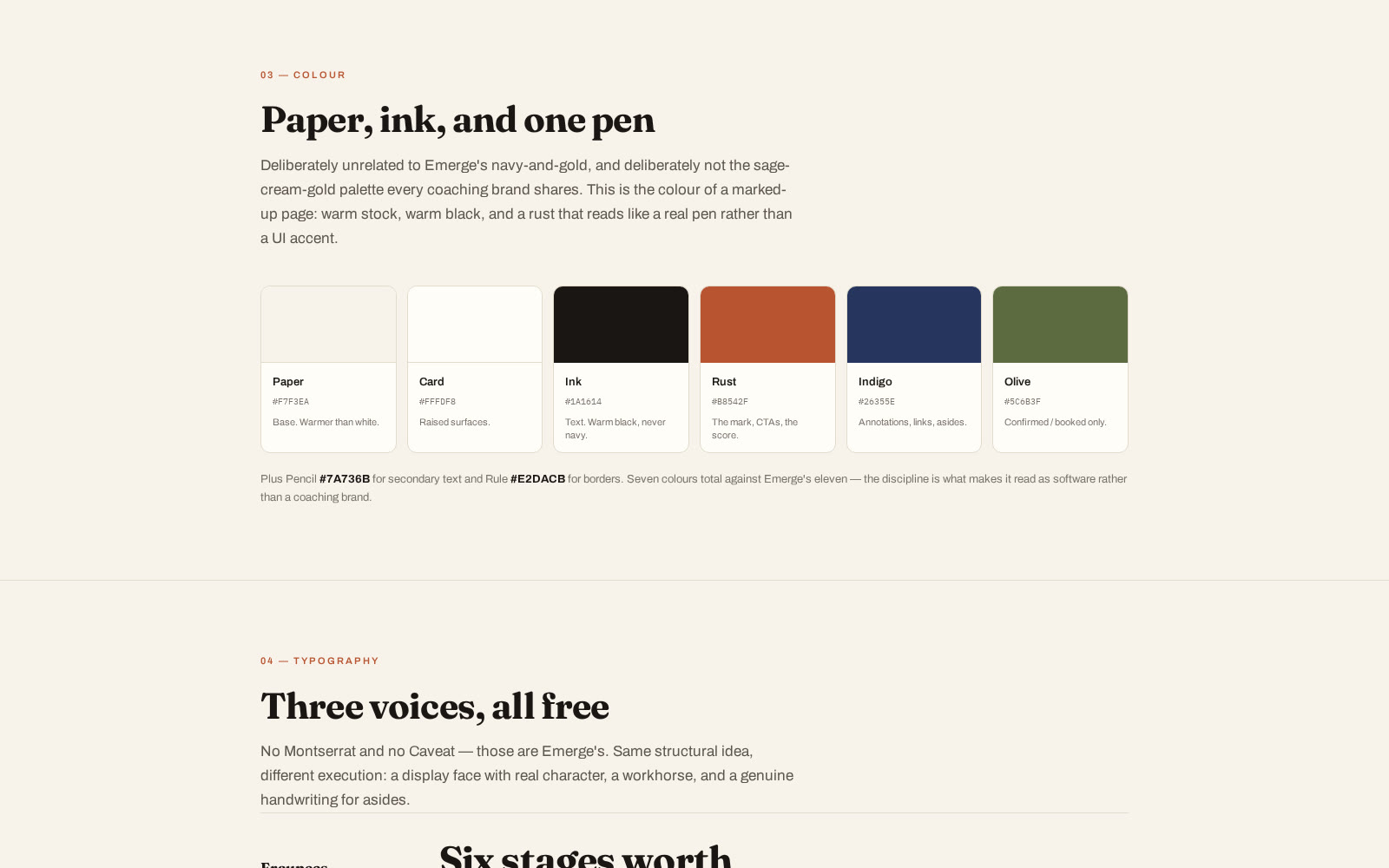
Paper, ink, and one pen.
Deliberately unrelated to every palette the category shares: warm stock, warm black, and a rust that reads like a real pen rather than a UI accent. Indigo for annotations. Olive for booked, and only booked. Seven colors total, and the discipline is what makes it read as software rather than a coaching brand. Type in three voices, all free: a display face with real character, a workhorse, and genuine handwriting for asides.
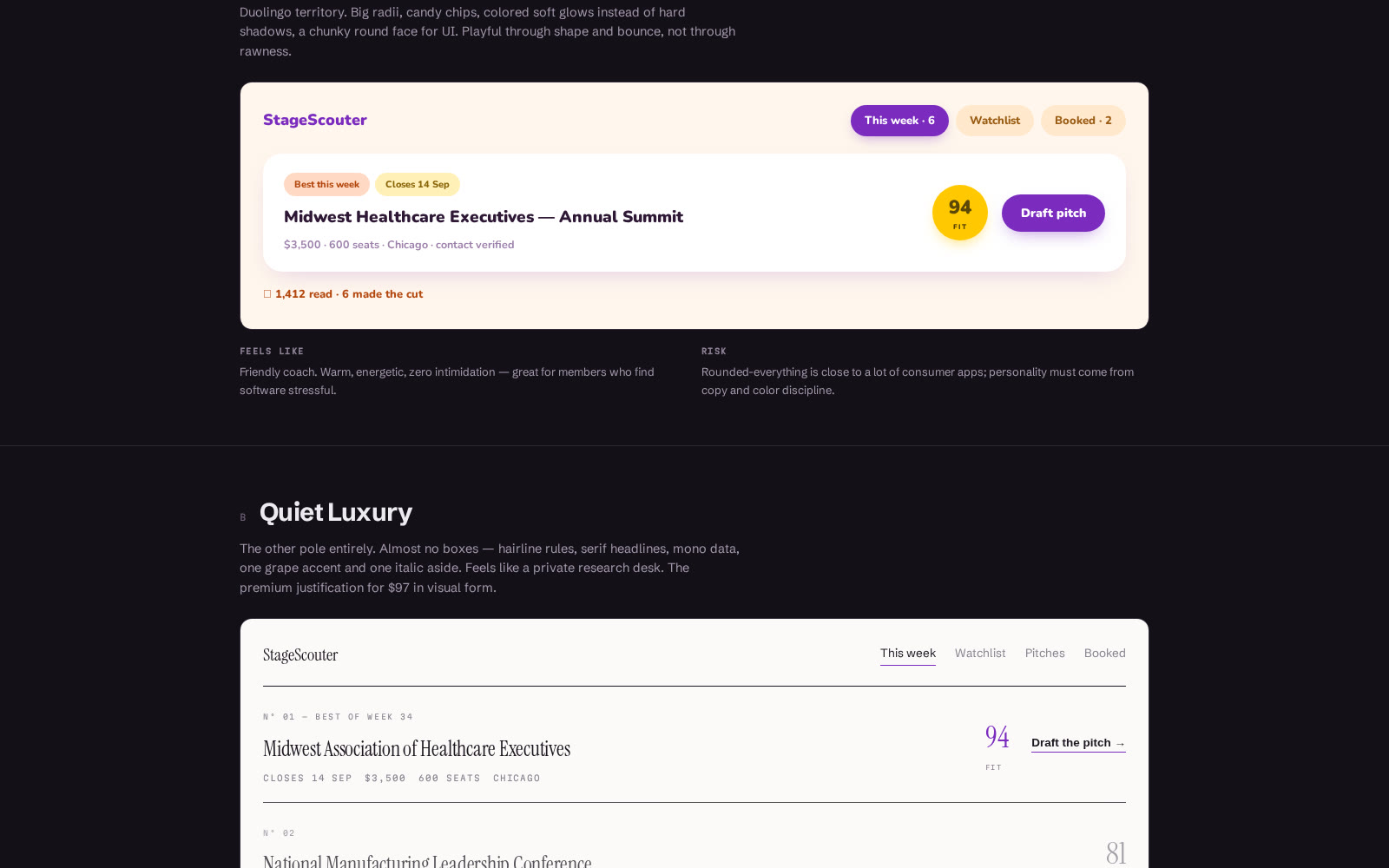
The palette of a marked up pageTwo UI temperatures, tested against the same screen: friendly coach and quiet luxury
04
The deliverables.
01
The Name
Stage Searcher became StageScouter: the promise of judgment, not the mechanism of search.
02
Identity v2
The circled entry mark, seven colors, three type voices, and the rules for using them.
03
UI Directions
Two complete interface temperatures, each argued for and against, ready for the build.
04
The Entire App
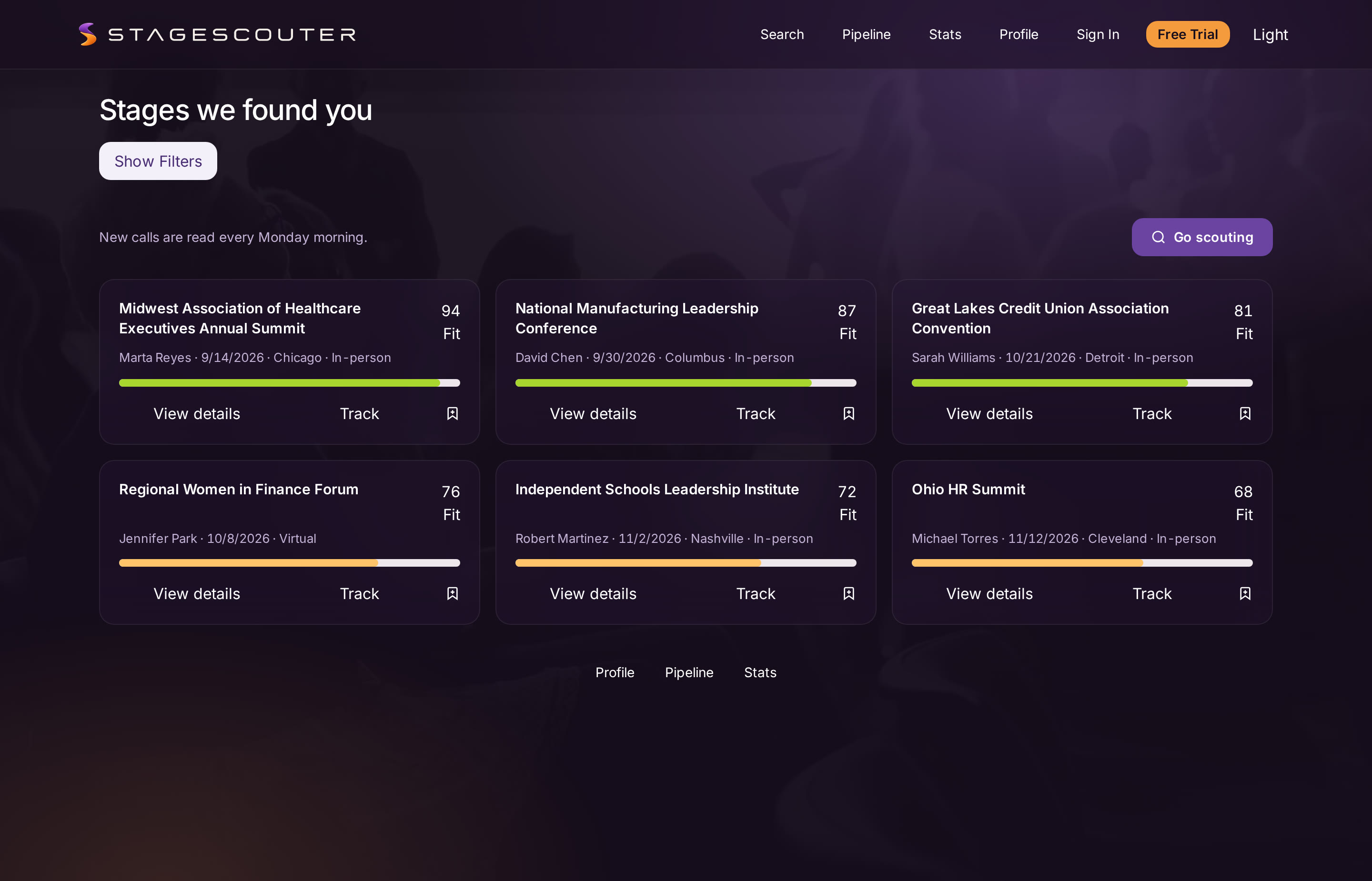
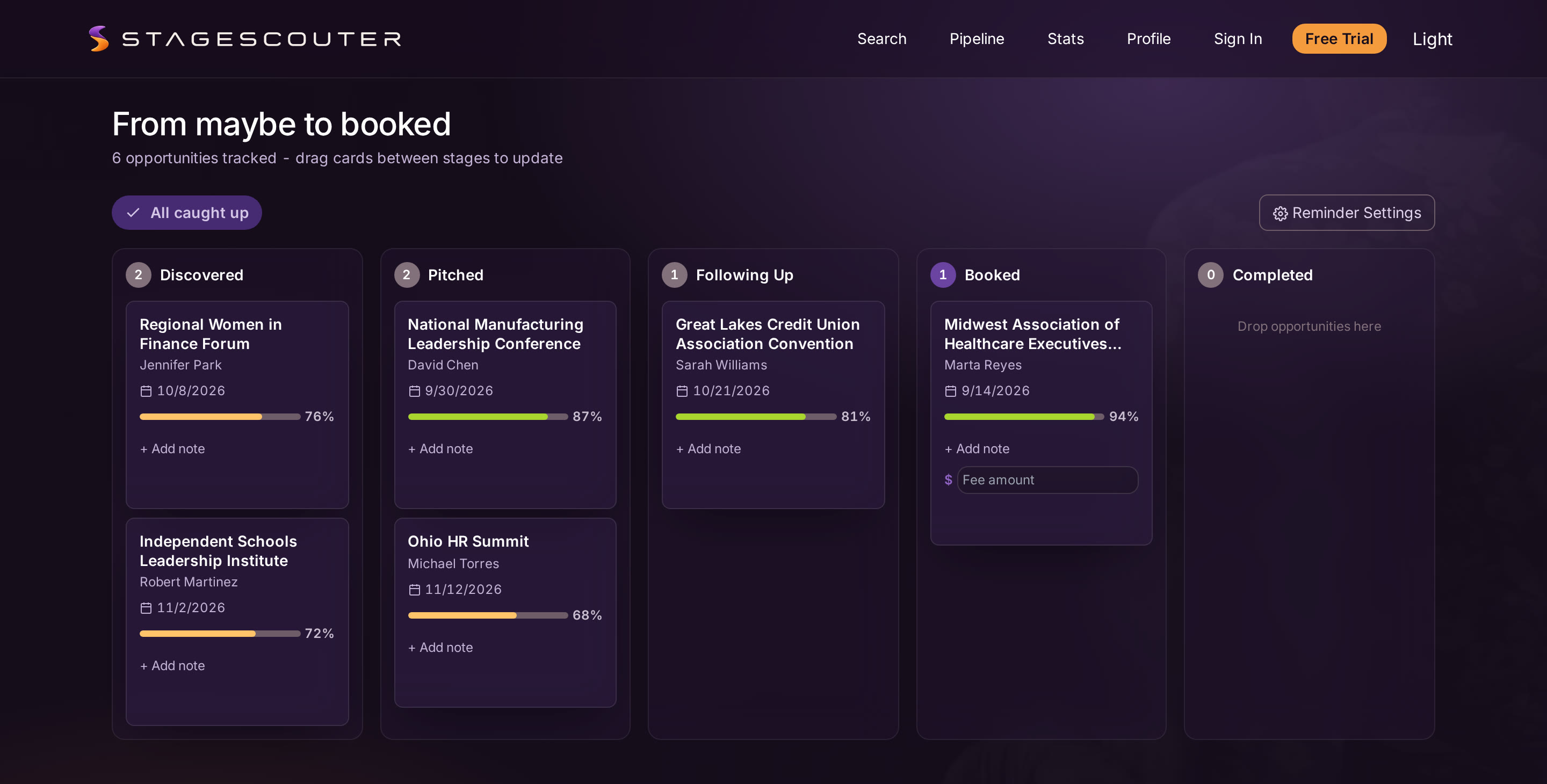
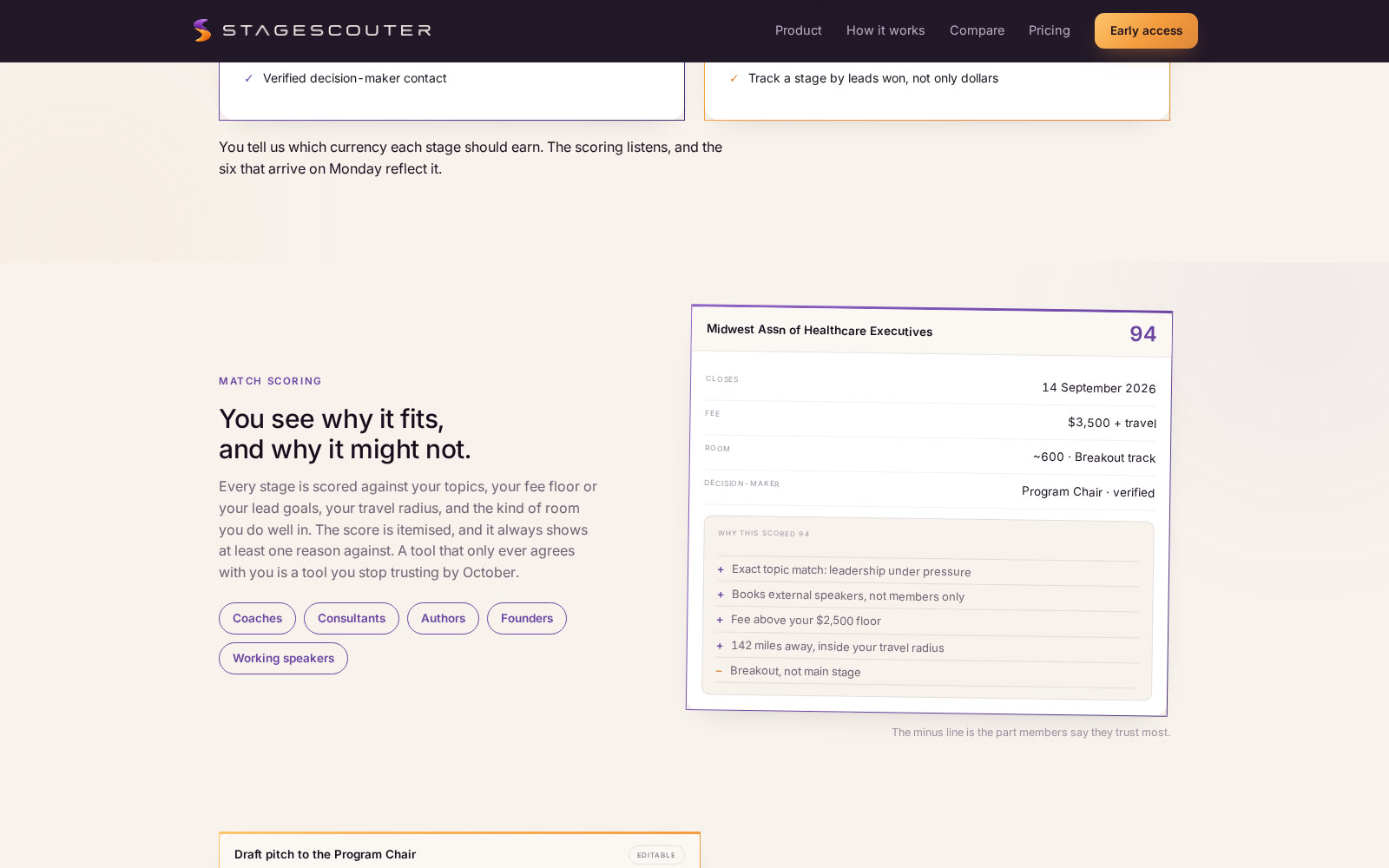
Match scoring with itemised reasons, pitch drafting in the member’s voice, pipeline with deadline reminders, and the Monday delivery engine. Designed, built, and shipped.
05
The product, live.
What it ended up as: a shipped platform at stagescouter.com, launching to founding members in September. The site leads with the line the whole brand earns: You’re not hard to book. You’re just hard to find. Behind it, the working app: 1,400 calls read weekly, six delivered every Monday, each scored with at least one reason against.
Live · stagescouter.comThe results screen · The actual app, not a mockupThe pipeline board · Drag a card, the deadlines followScoring, with the minus line members trust mostOn the phone
06
The outcome.
A software product that reads like a private research desk instead of a subscription, and shipped that way. From the hand drawn ring to the Monday delivery, every screen keeps the promise the name makes: the whole list read, the six that fit returned.